





















































Explore the Genre
The Music That Carries a Country's Identity
Reggae is the Jamaican genre that emerged from Trench Town in the late 1960s and was inscribed on the UNESCO Intangible Cultural Heritage List in November 2018. The arc — Mento to Ska to Rocksteady to Reggae — covers two postwar decades; the global ambassador was Bob Marley; the recording HQ was Studio One under Coxsone Dodd. The genre named itself in 1968 with Toots & The Maytals' "Do the Reggay" — not Bob Marley, who was still years from his international breakthrough.
The history below covers four eras of the genre — the origins, the pioneers, the Marley era, and the living genre today. The heritage anchors cluster in Kingston (Bob Marley Museum, Trench Town Heritage Center, Devon House) with the Nine Mile pilgrimage accessible from Ocho Rios. For festival-driven trips, time the visit to Reggae Sumfest in Montego Bay each July or Rebel Salute in St. Ann each January.
Got Questions?
Frequently Asked
Everything you need to know about how Jamaica Tours works and how to plan your trip.
Key Technical Signatures
What Makes It Reggae
The One Drop
The drum pattern where the kick drum falls on beat three, leaving beats one and two empty. The defining technical signature of reggae drumming.
The Skank Guitar
The offbeat guitar chop on beats two and four. It's what gives reggae its characteristic lurch — the space between the beats carries as much weight as the notes.
The Bass Lead
Bass guitar as a melodic instrument, not just rhythm. The bassline often carries the main harmonic movement while the guitar and keyboards fill above and around it.
Dub Remix Tradition
The instrumental version of a track with effects-heavy mixing, pioneered by King Tubby and Lee "Scratch" Perry. Every major reggae song had a dub version; it became its own genre.
Editor's Picks
The Four Eras of Jamaican Reggae
The Origins
Mento, Ska, Rocksteady & Reggae
Late 1940s–1960s
Trench Town
Studio One
The genre arc covers two decades of Jamaican musical evolution. Mento (rural folk) gave way to Ska (urban Kingston, faster and brass-heavy). Ska slowed into Rocksteady (1966–1968, soul-influenced, smaller bands). Rocksteady slowed further into reggae proper (late 1960s, heavier bass on the third beat). The genre coalesced in Trench Town, the West Kingston neighborhood that remains the canonical birthplace.
Traditional Rastafarian and African drumming styles — Kumina, Pukkumina, Revival Zion, Nyabinghi, and burru — wove into the rhythm tracks the Studio One house bands developed. Many 1968 records sit on the boundary between rocksteady and the emerging new sound.
The First Generation
The Pioneers — Toots, Cliff, Dekker, Studio One
"Reggae" coined 1968
Jimmy Cliff
Toots & The Maytals
Toots & The Maytals coined the term "reggae" with their 1968 single "Do the Reggay" — often misattributed to Bob Marley, it wasn't. Jimmy Cliff ("Many Rivers to Cross," The Harder They Come 1972 soundtrack) became the first international reggae star. Desmond Dekker had the first reggae UK number one with "Israelites" in 1968. Each came up through the same Kingston scene that fed Bob Marley a few years later.
Studio One — Clement "Coxsone" Dodd's Kingston studio — was the foundational venue where most pioneers cut their early records. Coxsone's house band laid down the rhythm tracks; the singers came in over the top. It functioned as a finishing school for the entire first generation, including The Wailers in their early years before they founded Tuff Gong as their own label in 1970.
The Global Breakthrough
The Wailers + Bob Marley Era (1972–1981)
Wailers founded 1963
Catch a Fire 1973
Marley d. May 11, 1981
Bob Marley + Peter Tosh + Bunny Wailer formed The Wailers at Studio One in 1963, signed to Island Records in 1972, and broke globally with "Catch a Fire" in 1973. Marley's solo arc through "Exodus" 1977, "Kaya," "Survival," and "Uprising" carried reggae from a Kingston scene to global pop charts. He died of melanoma on May 11, 1981, at 36.
Peter Tosh broke off solo in 1974, recording "Legalize It" and "Equal Rights," and was murdered on September 11, 1987. Bunny Wailer continued solo through 2021, the last surviving founder. The Marley family carried the lineage forward — Ziggy, Stephen, Damian, Ky-Mani, and Skip Marley still record. The Bob Marley Museum at 56 Hope Road is the canonical pilgrimage site.
The Current Generation
The Living Genre Today — Dub, Dancehall, Roots Revival
Dub
Lover's Rock
Dancehall
Chronixx · Protoje · Koffee
Reggae splintered after the Marley era. Dub is the instrumental remix tradition pioneered by King Tubby and Lee "Scratch" Perry. Lover's Rock is the smoother UK reggae of the 1970s and 80s. Dancehall emerged late 1980s as a faster, more digital offshoot. Roots Revival is the current generation rebuilding the conscious tradition.
Chronixx, Protoje, and Koffee anchor the Roots Revival — Koffee won the 2020 Grammy for Best Reggae Album at age 19, the youngest ever. Reggae Sumfest in Montego Bay each July (30-plus years, the genre's biggest annual event), Rebel Salute in St. Ann each January (roots-focused), and the Welcome to Jamrock Reggae Cruise (late November) carry the live tradition.
The Global Ambassador
Bob Marley: The Man, the Music, the Museum
Robert Nesta Marley was born February 6, 1945, in Nine Mile, St. Ann parish — the village in the interior hills an hour and a half south of Ocho Rios. He grew up partly in Trench Town, West Kingston, where he formed The Wailers with Peter Tosh and Bunny Livingston (later Bunny Wailer) in 1963. The band cut their earliest records at Studio One under Coxsone Dodd before establishing their own Tuff Gong label in 1970.
After signing to Chris Blackwell's Island Records in 1972, the global breakthrough came with Catch a Fire in 1973 and Natty Dread in 1974. The 1976 Smile Jamaica concert — days after a failed assassination attempt on Marley at his Hope Road home — remains the defining political moment of his career. Exodus 1-877-768-8370 was later voted the greatest album of the 20th century by Time magazine. Marley died of acral lentiginous melanoma on May 11, 1981, in Miami.
His home at 56 Hope Road, Kingston, where he lived from 1975 until his death, is now the Bob Marley Museum — Jamaica's most visited cultural site. The house retains Marley's kitchen, his bedroom, his recording studio, the bullet holes in the wall from the 1976 attempt, and his gold records. Rita Marley has stewarded the museum since 1987. Open Mon–Sat, 9:30 AM–4 PM; tours depart hourly.
Why It Matters
Why Reggae Carries Jamaica's National Identity
Reggae carries Jamaica's national identity in a way few music genres carry their countries' — UNESCO inscribed it on the Intangible Cultural Heritage list in 2018, recognizing both its musical innovation and its cultural-political weight. The history of reggae is, in real ways, the history of postwar Jamaica.
UNESCO 2018
UNESCO 2018 — Intangible Cultural Heritage
UNESCO inscribed reggae music on its Representative List of the Intangible Cultural Heritage of Humanity in November 2018, recognizing both the musical innovation (the one-drop pattern, the off-beat skank, the dub remix tradition) and the cultural weight (its role in social commentary, Rastafarian spirituality, and Jamaica's postcolonial identity formation). It is the only genre of popular music with this UNESCO recognition.
Coined 1968
Coined 1968 — "Do the Reggay"
Toots & The Maytals coined the word "reggae" with their 1968 single "Do the Reggay" — not Bob Marley, who was still a few years from his international breakthrough. The 1968 release marks the genre's official self-naming, even though the musical transition from rocksteady to reggae had already been underway for a couple of years in the recording studios of Kingston.
Trench Town Origins
Trench Town — The Birthplace Neighborhood
Trench Town is the West Kingston neighborhood where reggae coalesced — a working-class district, the home of Bob Marley's early years, and the birthplace of the Wailers' first recordings. The Trench Town Heritage Center preserves the Marley-era yard and offers walking tours through the streets where the genre took shape. It reopened in mid-November 2025 following the brief closure during Hurricane Melissa and is operating normally.
Bob Marley Era
Bob Marley Era — 1972–1981
The Wailers signed to Island Records in 1972 and broke globally with "Catch a Fire" in 1973 — the moment reggae crossed from a Kingston scene to a worldwide phenomenon. Marley's nine-year run as the genre's global ambassador remains its commercial high-water mark. He died May 11, 1981, at 36. See Bob Marley Museum →
Where to Hear It
Top Music Venues, Studios & Heritage Sites
Kingston · Heritage Site
Bob Marley Museum — 56 Hope Road
Marley's home from 1975 until his death in 1981, now a National Heritage Site under Rita Marley's stewardship. The bullet holes from the 1976 assassination attempt are still visible. Tuff Gong Records was headquartered here during the Wailers' global breakthrough years. The single most-visited cultural site in Jamaica.
Kingston · Active Studio
Tuff Gong Studios
Originally founded by Bob Marley on Marcus Garvey Drive in Kingston, Tuff Gong remains one of Jamaica's foremost recording studios. The Marley family continues to operate it. Occasional public tours run through the museum complex — verify availability before visiting. The studio that produced the Wailers' defining catalogue is still in active use today.
Kingston · Heritage Walk
Trench Town Heritage Center
The preserved Marley-era yard in West Kingston where the genre coalesced. Walking tours thread the streets where Bob Marley, Jimmy Cliff, and the first generation of reggae artists grew up and formed their bands. The Heritage Center reopened after Hurricane Melissa. The most historically important neighborhood in Jamaican music history.
Kingston · Sunday Sessions
Kingston Dub Club
The Sunday-only outdoor reggae listening session in the hills above Kingston — running for over a decade. An outdoor speaker stack, serious reggae fans, and Kingston Harbour views at sunset. Walk-in (no booking required); get there by 8 PM for the sunset start. Cash-only at the gate. The single best authentic live-reggae night on the island.
Negril · Weekly Sessions
Negril West End Cliff Bars
The west coast cliff bar circuit — Alfred's Ocean Palace, Bourbon Beach, and the various bars along Seven Mile — hosts live reggae most evenings. Lower key than Kingston but consistent: acoustic sets, sunset timing, and the kind of unhurried Negril vibe that makes the music feel like it belongs to the landscape. Rick's Cafe is the sunset anchor.
St. Ann · Marley Birthplace
Nine Mile — Marley's Birthplace & Grave
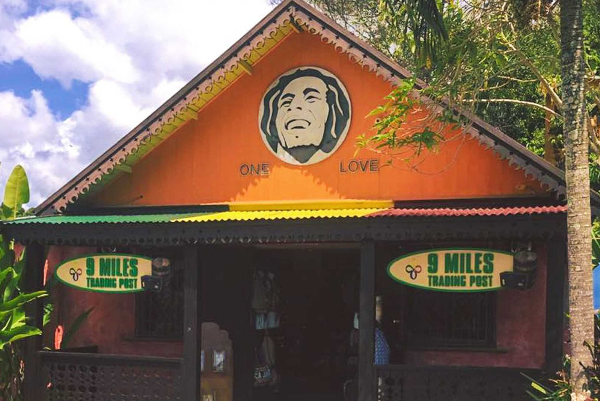
The village in the interior hills of St. Ann where Marley was born, raised, and is now buried. His childhood home and mausoleum are open to visitors; his first guitar is still on display. About 90 minutes south of Ocho Rios. The full Marley pilgrimage pairs Nine Mile with the Bob Marley Museum in Kingston across a two-night itinerary.
Book an Experience
Music Experiences Worth Booking
A full Kingston music-heritage day: Trench Town Heritage Center in the morning, the Hope Road cultural corridor at lunch, and the Bob Marley Museum in the afternoon. Includes a guide who grew up in the Kingston music scene. The canonical reggae pilgrimage condensed into a single well-paced day.
Two-day itinerary: Bob Marley Museum at 56 Hope Road (Day 1, Kingston), followed by a Nine Mile pilgrimage from an Ocho Rios base (Day 2). His childhood yard in Trench Town, his studio and home in Kingston, and his birthplace and burial site in St. Ann — the complete picture.
Sunday evening at the Kingston Dub Club — the hills-above-Kingston outdoor session that has been running for over a decade. Get there by 8 PM for the sunset view over Kingston Harbour before the music starts. Pair with dinner at Devon House (a 20-minute drive) for the full Hope Road cultural evening.
Book This Experience →
Practical Tips
Where to Hear Reggae, When to Visit, & What to See
Reggae Sumfest (Montego Bay, mid-July, 7-day festival, the biggest reggae event globally, 30,000+ attendees — book accommodation 6+ months ahead). Rebel Salute (St. Ann, January, roots-focused, run by veteran reggae artist Tony Rebel). Reggae Marathon (Negril, December). Welcome to Jamrock Reggae Cruise (late November, departs MoBay port, Damian Marley's annual five-day cruise). Reggae Sumfest 2026 is confirmed for July.
Bob Marley Museum at 56 Hope Road, Kingston — open Mon–Sat 9:30 AM–4 PM, ~$30 USD entry, tours depart hourly. Trench Town Heritage Center — preserved Marley-era yard, walking tours available. Nine Mile, St. Ann — Marley's birthplace and grave, ~90 min from Ocho Rios. Goldeneye in Oracabessa — Ian Fleming's home where Marley also recorded sessions.
Kingston (KIN) is 25 min from the Bob Marley Museum and 15 min from Trench Town — the music-pilgrimage base. The canonical day: Trench Town morning, Devon House lunch, Bob Marley Museum afternoon. For Nine Mile, an Ocho Rios base is best (~90 min). Cruise visitors from Falmouth or MoBay face a 4+ hour drive to Kingston — an overnight extension is strongly recommended over a single-day shore excursion.
Reggae Sumfest 2026 is confirmed for July. The Trench Town Heritage Center and Bob Marley Museum both reopened in mid-November 2025 after brief closures during Hurricane Melissa in late October — both are operating normally now. Peak storm season runs June through November. Sumfest dates have historically shifted when storms approach; verify schedules before booking travel around festival dates.
Essential Listening
Recommended Albums
Ten albums that tell the story of Jamaican music — from its Studio One foundation through the Marley era and into the current generation.
01
Catch a Fire — The Wailers
The Island Records debut that broke reggae globally. The moment everything changed.
1973
02
Exodus — Bob Marley & The Wailers
Time magazine's album of the century. "Jamming," "One Love," "Three Little Birds."
1977
03
The Harder They Come — Jimmy Cliff (Soundtrack)
The film that introduced reggae to international audiences. The complete genre statement.
1972
04
Equal Rights — Peter Tosh
Tosh's political masterwork. "Get Up, Stand Up," "Stepping Razor." Uncompromising.
1977
05
Blackheart Man — Bunny Wailer
The solo debut from the third Wailer — deep Nyabinghi roots, entirely overlooked.
1976
06
Toots in Memphis — Toots & The Maytals
The band that named the genre covers American soul classics. Surprisingly great.
1988
07
King Tubby Meets Rockers Uptown — Augustus Pablo
The foundation of dub. King Tubby's mixing desk as a musical instrument.
1976
08
Super Ape — Lee "Scratch" Perry & The Upsetters
The Black Ark dub masterpiece. Lee Perry's most psychedelic and brilliant production.
1976
09
Chronology — Chronixx
The roots revival statement album. Chronixx brings conscious reggae back with authority.
2017
10
Rapture — Koffee
Grammy-winning debut at 19. The clearest signal of where the genre is heading.
2019
FAQ
Frequently Asked Questions
Who founded reggae music in Jamaica?
Toots & The Maytals coined the term "reggae" with their 1968 single "Do the Reggay" — often misattributed to Bob Marley, it wasn't. The Wailers (Bob Marley + Peter Tosh + Bunny Wailer) became the global face of the genre after signing to Island Records in 1972 and breaking through with "Catch a Fire" in 1973. Jimmy Cliff was the first international reggae star, anchored by his role and music in the 1972 film The Harder They Come.
Where did reggae originate in Jamaica?
Trench Town, a working-class neighborhood in West Kingston, is the canonical birthplace where the genre coalesced from rocksteady in the late 1960s. Studio One — Clement "Coxsone" Dodd's recording studio in Kingston — was the foundational venue where most first-generation reggae artists, including The Wailers in their early years, cut their first records. The Trench Town Heritage Center preserves the Marley-era yard and runs walking tours.
Is reggae a UNESCO heritage?
Yes — UNESCO inscribed reggae music on its Representative List of the Intangible Cultural Heritage of Humanity in November 2018. The inscription recognizes both the musical innovation (the one-drop drum pattern, the off-beat skank guitar, the dub remix tradition) and the cultural-political weight. It is the only genre of popular music with this recognition.
Who shot Peter Tosh?
Peter Tosh was murdered on September 11, 1987, at his home in St. Andrew, Kingston, by Dennis "Leppo" Lobban — a man Tosh had befriended and helped after Lobban's release from prison. Lobban was convicted and sentenced to death (later commuted). Two other people in the home were also killed. Tosh was 42.
What's the difference between reggae and dancehall?
Reggae is the broader umbrella — slower tempo, conscious lyrics, a roots vibe rooted in Rastafarian spirituality and social commentary. Dancehall emerged in the late 1980s as a faster, more digital, more party-focused offshoot — Yellowman, Shabba Ranks, Beenie Man, and Bounty Killer led the early years. The two coexist on Jamaican radio and at festivals; many artists move between both depending on the track.
Island Guide
From The Blog
Travel tips, insider guides, and deep dives into everything Jamaica.