Ackee & Saltfish — The National Dish
Ackee is a fruit that was brought to Jamaica from West Africa in the 18th century and has since become so thoroughly Jamaican that it appears on the coat of arms. When the ripe yellow arils are parboiled and sautéed with desalted saltfish (salt-preserved cod, a legacy of the trade routes), onions, scotch bonnet, tomatoes, and black pepper, the result looks and has the texture of creamy scrambled eggs. The taste is entirely its own — savoury, slightly fatty, with a delicate flavour that the strong saltfish anchors without overwhelming.
It is the national dish. It is eaten at breakfast. It appears on every hotel breakfast buffet and at every local cook shop on the island. If you eat one traditional Jamaican meal, make it this one.
A practical note: unripe ackee is toxic, containing hypoglycin A, which caused enough hospitalisation in the United States that the FDA banned ackee imports for most of the 20th century. The ban was lifted for properly processed canned ackee. In Jamaica, the fresh fruit is picked only when the pods have opened naturally, indicating ripeness. The risk of encountering improperly prepared ackee at a legitimate restaurant or hotel is negligible. Don't let the history put you off.
Bammy & Festival
Bammy is a cassava flatbread — pressed, dried, then either fried until golden or steamed in coconut milk until soft. It has a slight density and a clean, neutral flavour that makes it the traditional partner for fried fish at roadside seafood spots. You will not see bammy listed on a tourist menu by name. You will encounter it on your plate alongside fried snapper or escovitch fish at any proper Jamaican cook shop without it being introduced. Eat it. It's there for a reason.
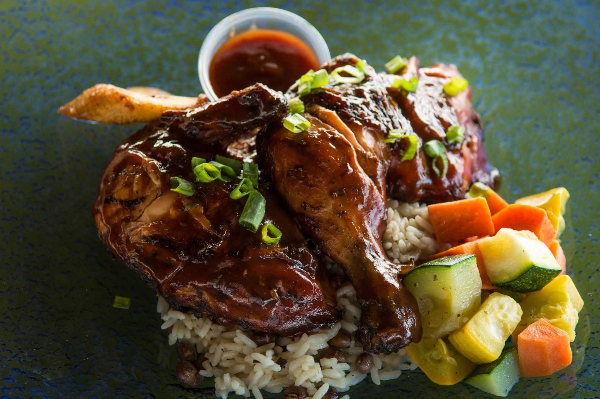
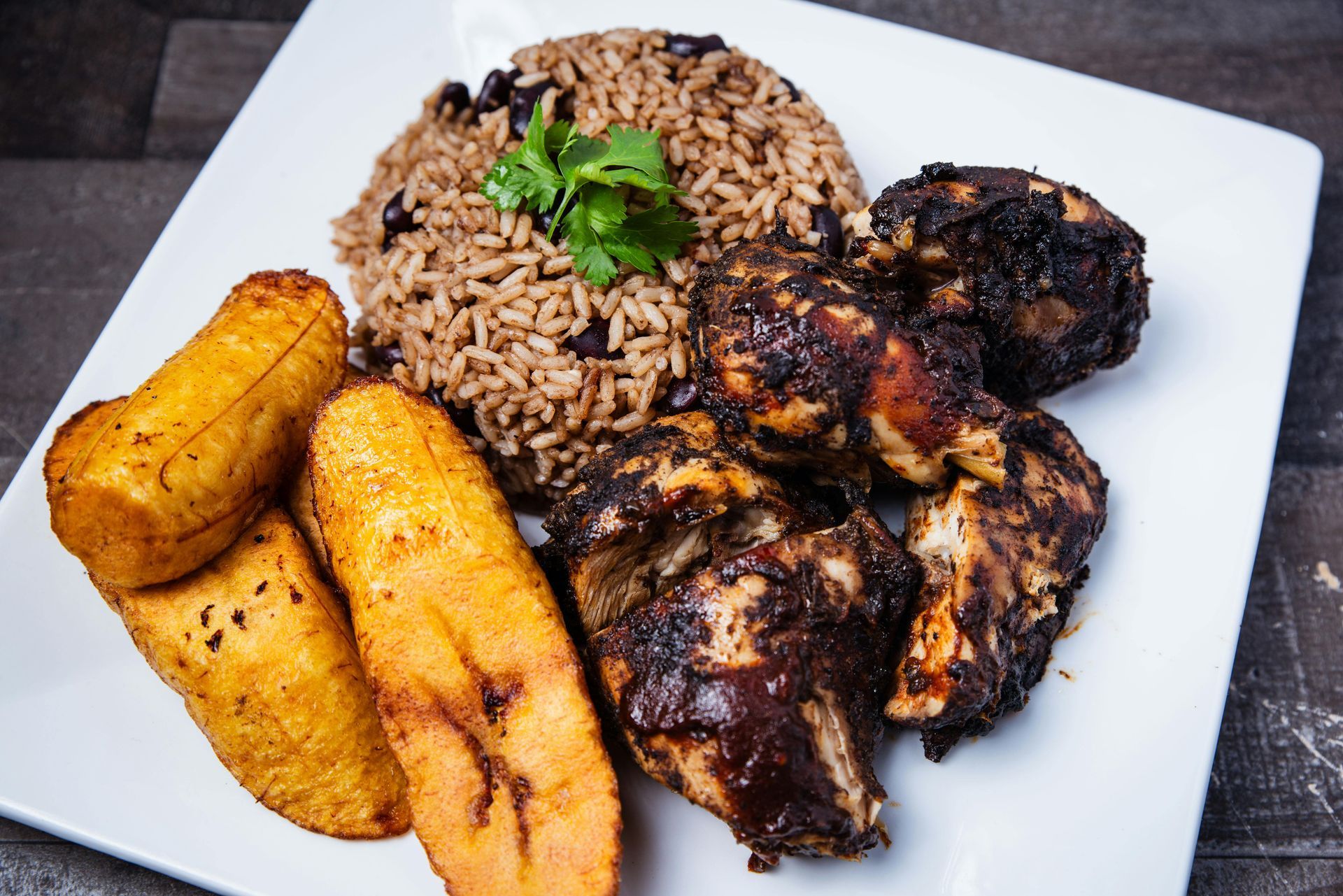
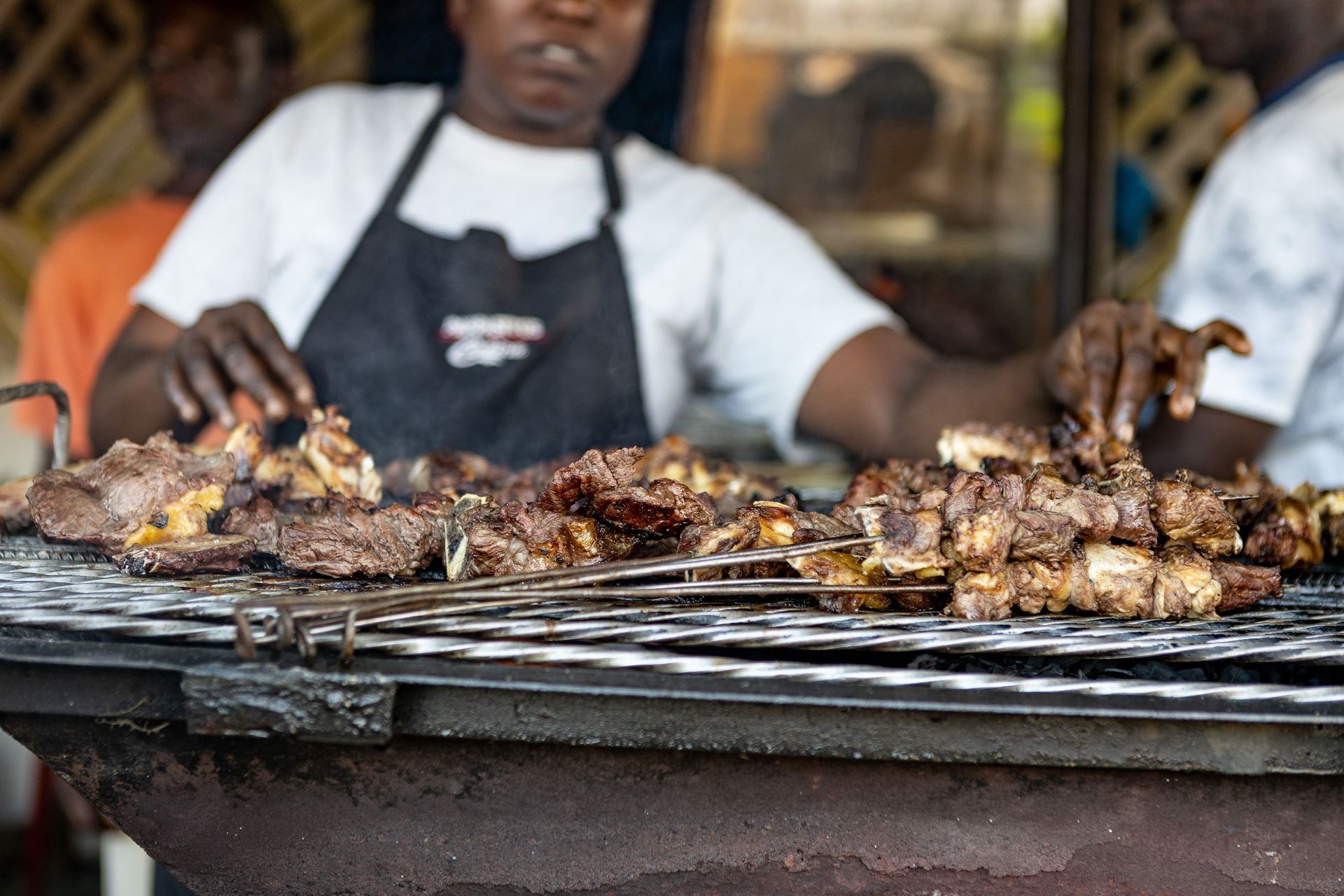
Festival is a sweetish fried dough dumpling — cornmeal and flour, a touch of sugar, shaped into a fat finger and deep fried until the outside is crisp and the inside soft. It arrives alongside jerk without announcement. The contrast between the smoky, savoury jerk and the slightly sweet festival is not accidental. It is the correct pairing, arrived at over decades of iteration by people who eat jerk every week.
Street Food Price Guide
- Beef patty (Juici Patties or local bakery): $1–$2 USD
- Patty and hard dough bread: $1.50–$2.50 USD
- Quarter jerk chicken with festival: $5–$8 USD
- Half jerk chicken with festival and bammy: $10–$15 USD
- Full ackee and saltfish breakfast (cook shop): $6–$10 USD
- Proper Blue Mountain coffee (estate or Gap Café): $6–$10 USD
- Red Stripe beer (most expensive thing on a street-food menu): $3–$5 USD
Blue Mountain Coffee
Jamaica Blue Mountain coffee is one of the most controlled coffee appellations in the world — grown only between 3,000 and 5,500 feet in the Blue Mountain range, certified by the Coffee Industry Board of Jamaica, and exported primarily to Japan, which purchases approximately 80% of annual production. This is why Blue Mountain coffee is expensive and why the majority of what is served as "Blue Mountain" in Jamaican hotels is not actually Blue Mountain coffee. The blends are legal but confusingly labelled.
To get a proper cup, go to: Café Blue at the Sovereign Centre in Kingston (consistent, well-sourced, comfortable); Gap Café at Guava Ridge on the mountain road (altitude 4,000 feet, the coffee is what you came for, the view is a bonus); or take a tour of Craighton Estate, Old Tavern Estate, or Clifton Mount Estate, any of which will give you the full context of how the coffee is grown, processed, and graded before the cup arrives in your hand. The difference between a cup of properly sourced Blue Mountain and what most hotels serve is significant and worth seeking out at least once.
Eat It Properly
Jamaica Tours food tours take a full day to cover the eating correctly: Scotchies for jerk at lunch, a local market for produce and context, bammy and escovitch fish at a roadside seafood stand, and a Blue Mountain coffee tasting at a working estate. It is not a sanitised food tour. The market is a real market. The fish stand has plastic chairs and paper plates. The coffee is served in the estate's processing shed. This is intentional.
If you would rather build your own route, the framework is: start with a patty at Juici Patties for breakfast ($2), get jerk at Scotchies or a roadside stand for lunch ($12), and find a cook shop for ackee and saltfish one morning before the hotel buffet has a chance to give you its version. Three meals, total cost under $30, and you've eaten Jamaica correctly.